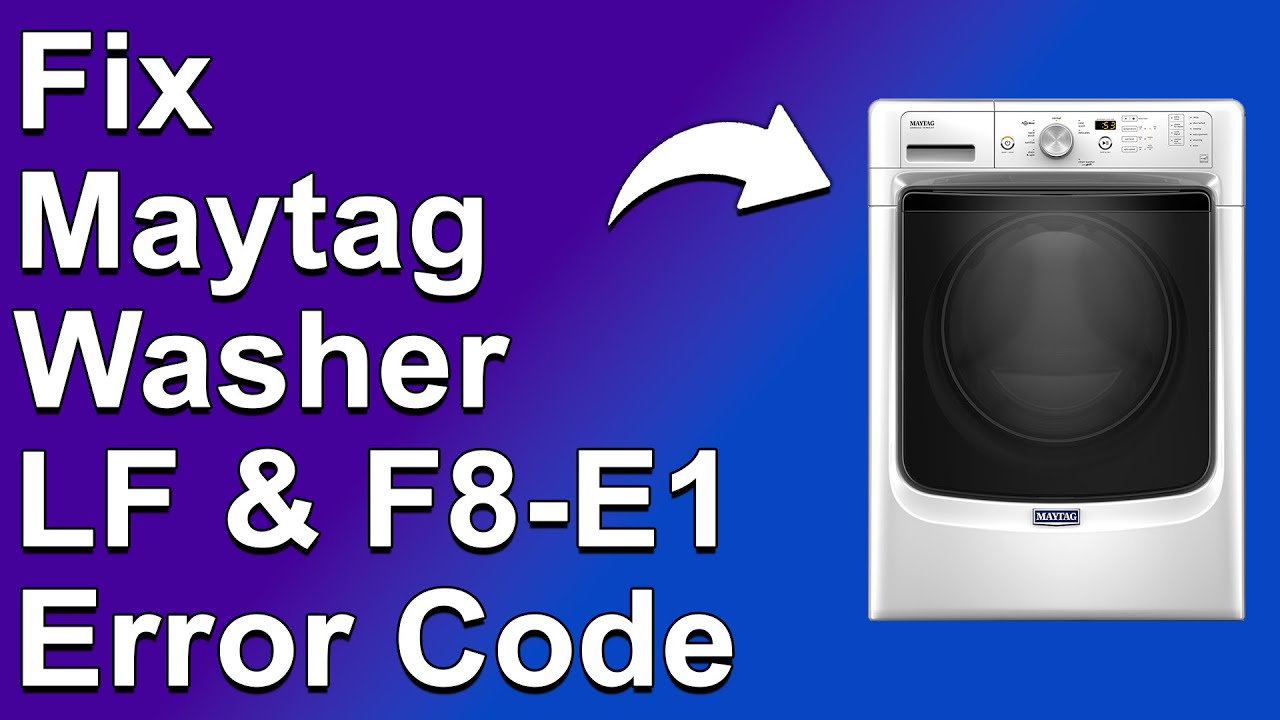
If you’re staring at the Maytag washer error code “F8,” you’re likely feeling frustrated and overwhelmed. This error indicates an overflow condition, which often stems from water supply issues or drainage blockages.
It can be a daunting task to pinpoint the exact cause, especially if you’re not familiar with washer mechanics. But don’t worry—you’re not alone in this!
Understanding the root of the problem is crucial for a successful fix. In this post, we’ll delve into the common reasons behind the F8 error, provide step-by-step troubleshooting guidance, and help you get your washer back to working order.
Stick around to discover the solutions you need to resolve this irritating issue once and for all!
Understanding the Problem
When your Maytag washer shows the error code “F8,” it usually points to an issue with the water supply. This can often be traced back to either a malfunctioning water sensor or a clogged drain pump. The water sensor is responsible for monitoring the fill levels in the drum, and if it fails, it may inaccurately report the water amount, resulting in this error code. Similarly, if the drain pump is obstructed, it may struggle to efficiently expel water, which can lead to overflow issues.
To address this problem, start by inspecting both the water sensor and the drain pump. First, check the water inlet for any blockages that could be hindering the flow of water. Next, take a look at the drain pump to ensure it is free of debris. This may involve removing any lint or foreign objects that could be causing an obstruction.
Required Toolkit
To effectively tackle the F8 error code on your Maytag washer, it’s essential to have the right toolkit on hand to access and evaluate the necessary components safely. Here’s a straightforward guide to help you prepare:
- Multimeter: This will be crucial for checking the electrical continuity of both the water level sensors and other electrical components. Understanding how to use a multimeter is key to diagnosing electrical issues accurately.
- Screwdrivers: A set of screwdrivers, both Phillips and flathead, will allow you to remove the washer’s panels. This access is necessary to examine the internal parts that may be contributing to the overflow condition.
- Hose Clamp Pliers: These are essential for inspecting the drainage system. They enable you to disconnect hoses safely, allowing you to check for any blockages that might impede water flow.
- Bucket: Have a bucket handy to catch any residual water during your drainage check. This not only keeps your workspace clean but also helps prevent accidents.
- Flashlight: A bright flashlight will be invaluable for illuminating tight spaces within the washer, allowing you to see clearly as you work on the internal components.
Safety First
Ensuring your safety while working on your Maytag washer is paramount. As a seasoned appliance repair technician with over 20 years of experience, I want to empower you with practical and reliable safety measures. Here’s a concise reference table that outlines essential steps to keep you safe during your repairs:
| Safety Measure | Description |
|---|---|
| Turn Off Power | Always unplug the washer from the wall outlet before starting any repairs. This is your first line of defense against electrical hazards. |
| Check for Leaks | Before you begin, inspect all hoses and connections for any signs of water leaks. This helps prevent slips and falls, which can lead to serious injuries. |
| Wear Protective Gear | Equip yourself with gloves and safety goggles. Gloves protect your hands from sharp edges and potential hazards, while goggles shield your eyes from debris. |
| Avoid Wet Floors | Ensure the work area is completely dry. Water and electricity don’t mix, and keeping the area dry significantly reduces the risk of electrical shock. |
| Follow Manufacturer Instructions | Always consult the user manual for your Maytag washer. Adhering to the manufacturer’s guidelines ensures safe operation and helps you avoid common pitfalls during repairs. |
Confirming the Diagnosis
Before you jump into repairs, it’s essential to confirm the diagnosis of the “F8” error code on your Maytag washer. This error typically signals an issue with the water level, so let’s take a systematic approach to identify the root cause.
First, observe the water level during a wash cycle. If you notice it’s unusually high, this could be the trigger for the error code. Next, we’ll need to test the pressure switch, which is responsible for monitoring the water level in the drum. For this, grab a multimeter. Set it to measure resistance (ohms) and check the sensor’s readings against the manufacturer’s specifications. If the sensor shows an inaccurate reading, it may be faulty and require replacement.
If the pressure switch checks out but the error persists, the next step is to inspect the hoses connected to the washer. Look for any clogs, kinks, or blockages that could restrict water flow. Even a small obstruction can lead to incorrect readings and trigger the “F8” code.
The Step-by-Step Repair
Once you’ve confirmed the diagnosis of the “F8” error code on your washing machine, it’s essential to proceed carefully with the repair process. First and foremost, prioritize safety by unplugging the washer from the power source. This will prevent any accidental shocks while you’re working on it.
Next, turn your attention to the water level pressure switch. This component can often be the culprit behind overflow issues if it’s malfunctioning. To check it, look for any signs of damage or disconnection. If you suspect it’s faulty, it may need to be replaced.
It’s also crucial to inspect the drain pump. A clogged or damaged drain pump can hinder proper drainage, leading to the F8 error. Carefully examine the pump for any debris that might be obstructing it, as well as the hoses connected to it. Clear out any clogs you find. If the pump appears to be damaged or not functioning correctly despite clearing it, you’ll need to replace it with a new one.
After addressing these components, test the water level sensor for continuity using a multimeter. This step ensures that the sensor is functioning correctly and can accurately measure the water level in the tub.
Once you’ve completed these checks and repairs, carefully reassemble the washer. Plug it back in and run a test cycle to ensure everything is operating correctly. If the “F8” error persists despite these troubleshooting steps, you may need to delve deeper into other potential issues. However, following this process will resolve most overflow problems related to the F8 error code. Remember, patience and thoroughness in these steps can save you time and effort in the long run.
When to Call a Professional
If you’ve followed all the recommended troubleshooting steps and the “F8” error code is still showing, it might be time to consult a professional. While many common issues like clogged hoses or faulty water inlet valves can often be resolved with DIY methods, some problems can be more complex. If you’ve thoroughly checked these components and the error remains, it could suggest a more serious issue with the control board or pressure switch.
Professionals possess the expertise and specialized tools to accurately diagnose and safely repair these intricate issues. If at any point you feel uneasy about performing repairs or don’t have the right tools, it’s perfectly fine to seek help. By investing in professional service, you not only save time but also reduce the risk of causing further damage to your washer. Remember, your safety and the longevity of your appliance are paramount, so don’t hesitate to reach out for assistance when needed.